

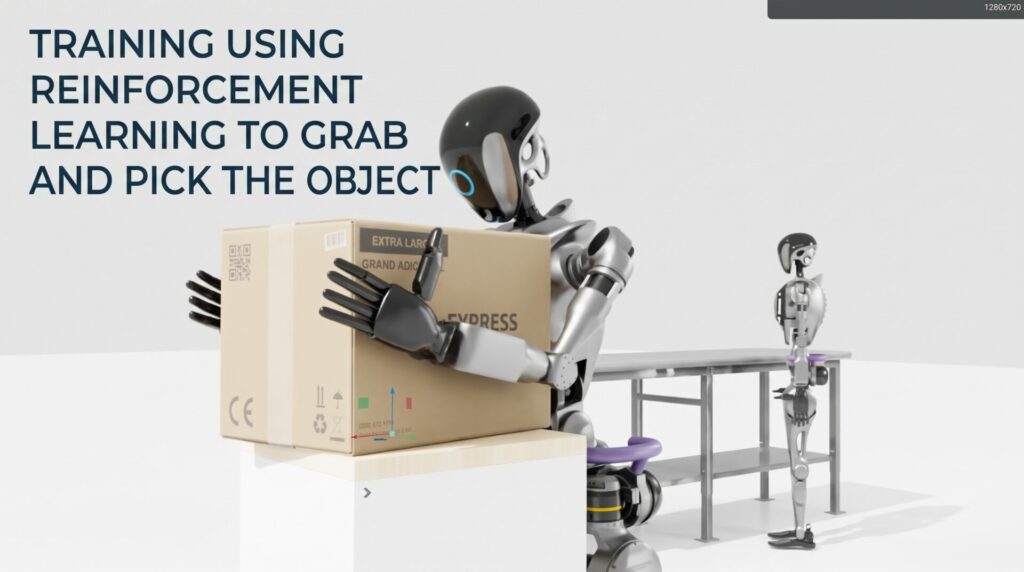
immersiverse warehouse studio
In robotic warehouses, training and testing robots in real environments is slow, costly, and risky. Dynamic layouts, moving workers, and rare edge cases, such as unexpected obstacles, sensor failures, or robot congestion, are hard to reproduce safely. We address this issue by creating a simulation toolchain that comprises realistic warehouse environments, dynamic robot and human models, and configurable scenarios to safely reproduce rare edge cases.
Training and validating robotic systems in real-world warehouse environments is slow, expensive, and inherently risky. Warehouses are highly dynamic spaces, filled with moving robots, human workers, changing layouts, varying inventory, and tight operational constraints.
Rare but critical edge cases, such as unexpected obstacles, sensor occlusions, navigation deadlocks, traffic congestion, hardware degradation, or coordination failures, are difficult to reproduce safely in live operations. Collecting enough real-world data to cover these scenarios disrupts productivity and exposes organisations to operational and safety risks.
As a result, robots often enter production without being tested against the full spectrum of real-world conditions, leading to inefficiencies, failures, and costly downtime.